Controls That Respond to Changing Weather
Thermostat Installation in Basehor for Kansas weather transitions and system efficiency
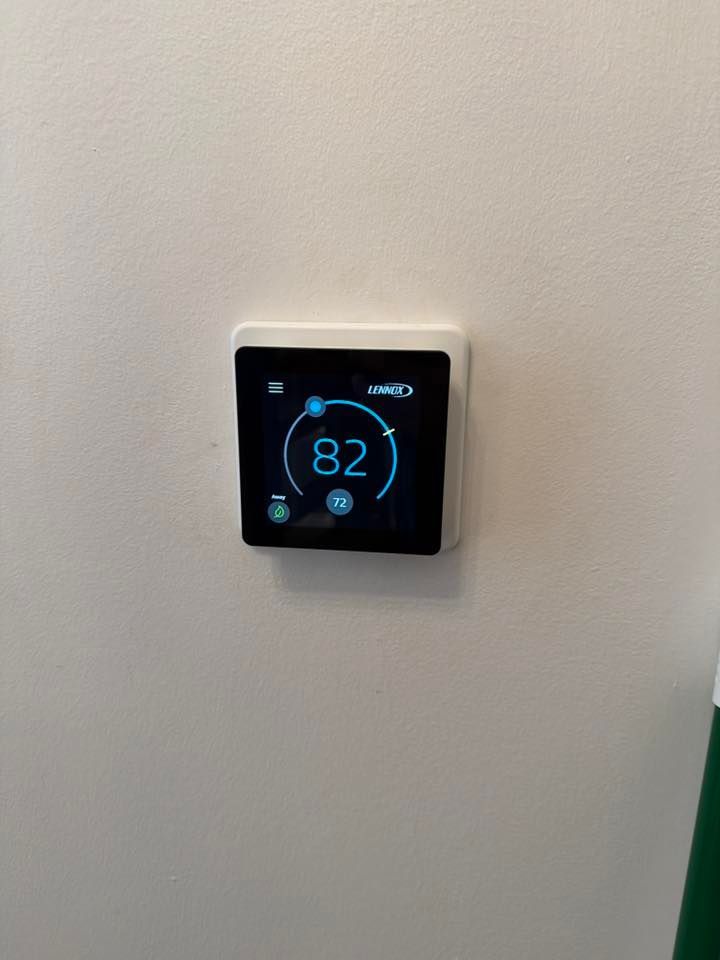
Kansas weather swings from heating to cooling and back within days, and programmable thermostats allow your HVAC system to adjust automatically as temperatures shift without constant manual changes. Dyno Heating & Cooling installs and configures thermostats throughout Basehor and surrounding communities, testing all heating and cooling stages to ensure reliable control of your comfort equipment. Digital thermostats provide precise temperature management and scheduling options that reduce energy waste during unoccupied hours while maintaining comfort when you're home.
Installation involves mounting the thermostat in a location away from direct sunlight, drafts, and heat sources that would skew temperature readings, then connecting control wires for each stage of heating and cooling your system provides. Multi-stage equipment requires additional wiring to control auxiliary heat, second-stage cooling, and fan speeds independently. The technician tests every function after wiring is completed—verifying first-stage heat, second-stage heat if equipped, first-stage cooling, second-stage cooling, and fan-only operation—to confirm the thermostat communicates correctly with your furnace, air conditioner, or heat pump.
Arrange a thermostat installation consultation to evaluate control options for your heating and cooling equipment.
Why Stage Testing Matters During Installation
Your HVAC system may have multiple heating and cooling stages that activate in sequence as demand increases, and the thermostat must send the correct signals to engage each stage at the appropriate time. Testing during installation confirms that calling for first-stage heat activates only the furnace or heat pump compressor, calling for second-stage heat brings on auxiliary strips or a secondary burner, and cooling stages operate independently without cross-activation. If wiring is incorrect or terminal designations are mismatched, you might get heating when you call for cooling, or second-stage equipment might run unnecessarily and increase energy costs.
After installation is completed, your system maintains the programmed temperature within one degree, switches between heating and cooling automatically as outdoor weather changes, and follows the schedule you've configured without manual intervention. Locally owned and operated service from Dyno Heating & Cooling includes programming assistance and instruction on adjusting settings for your preferences. You'll notice the system stops short-cycling between heating and cooling during mild weather, indoor temperature remains stable throughout the day, and equipment runtime decreases because staging operates efficiently instead of running full capacity for every temperature call.
Thermostat installation covers mounting, wiring, configuration, and testing, but it doesn't include modifications to HVAC equipment needed to add stages that weren't originally installed or corrections for undersized equipment that can't maintain temperature regardless of control quality. Smart thermostats with Wi-Fi connectivity require network configuration beyond basic installation, and integration with home automation systems may need additional hardware or subscription services. If your existing wiring lacks the conductors needed for advanced thermostat features, wire upgrades or adapter modules may be necessary.
Thermostat Installation Questions
Homeowners in the Basehor area typically ask about thermostat placement, compatibility with existing equipment, and programming options for efficiency.
Where should a thermostat be located for accurate temperature control?
Central interior walls on the main living level work best, away from windows, doors, supply registers, and exterior walls. Avoid hallways near bathrooms where steam affects readings, and don't mount near lamps or electronics that generate heat.
How do you test all heating stages during installation?
The technician sets the thermostat well above room temperature and confirms first-stage heat activates. After that stage runs briefly, the setpoint is raised further to trigger second-stage heat or auxiliary strips. Both stages are verified to start independently and shut off when the temperature target is reached.
What wiring is required for programmable digital thermostats?
Most installations need five to eight wires depending on equipment complexity: power, heating, cooling, fan control, common wire for digital display power, and additional conductors for second stages or heat pump reversing valves. Older systems may have only four wires and require upgrades for modern thermostat features.
Why do Kansas weather swings benefit from programmable controls?
Temperature differences of thirty degrees or more between morning and afternoon are common during spring and fall. Programmable thermostats switch from heating to cooling automatically as outdoor conditions change, maintaining comfort without you manually adjusting settings multiple times per day.
What's the difference between single-stage and multi-stage thermostat control?
Single-stage thermostats turn equipment fully on or off. Multi-stage controls activate lower-capacity heating or cooling first for mild conditions, bringing on additional stages only when needed. This reduces energy use and provides more consistent temperatures with less equipment cycling.
Dyno Heating & Cooling provides licensed and insured thermostat installation with comprehensive testing to verify all system stages function properly and controls respond accurately to temperature changes. Call now to upgrade your thermostat and take advantage of modern efficiency features designed for Kansas climate conditions.