
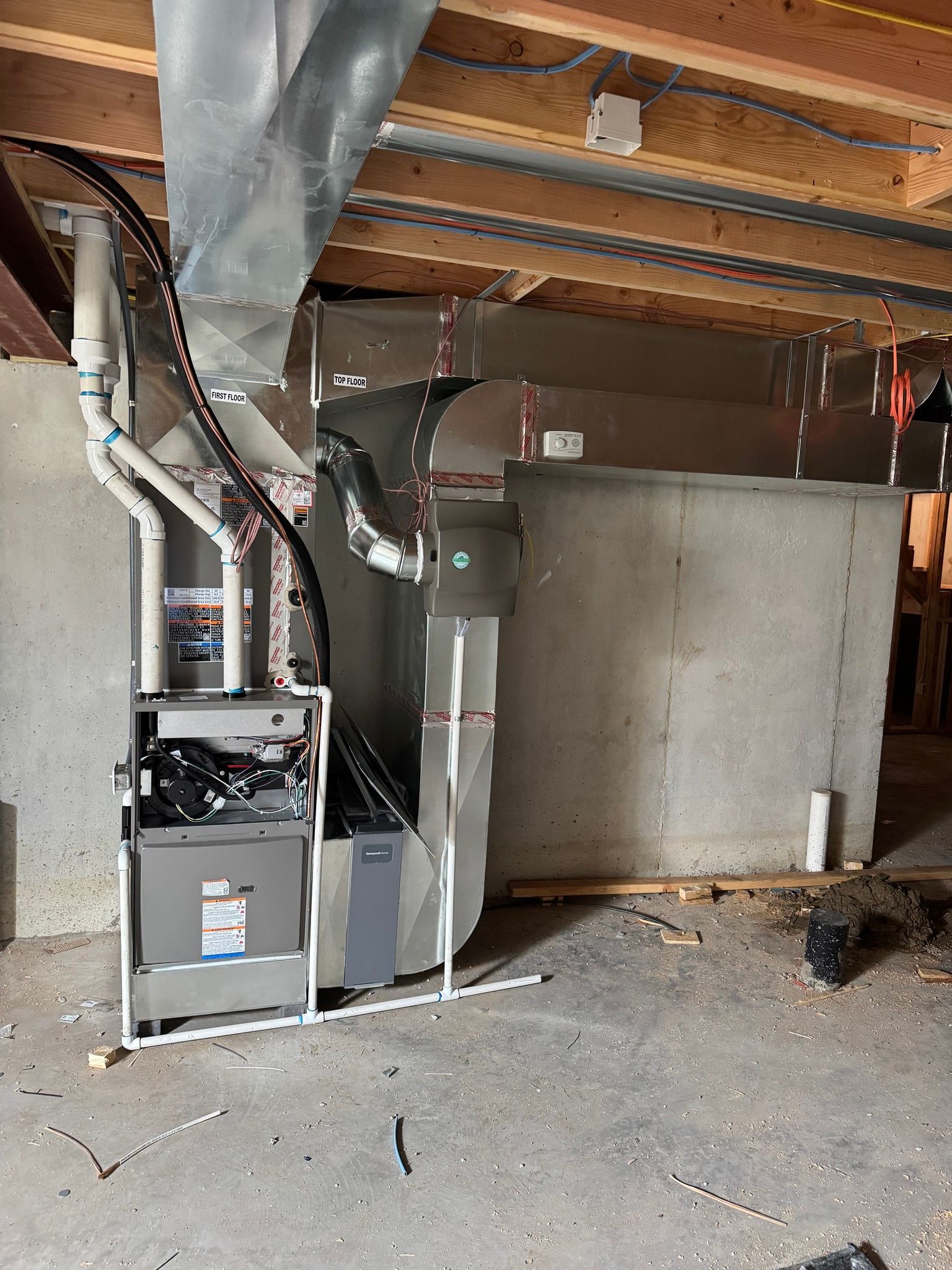
Sealed Ducts That Actually Deliver
Ductwork Installation & Repair in Basehor for Kansas humidity and temperature-related leakage
Leaking ductwork wastes conditioned air before it reaches living spaces, forcing your heating and cooling equipment to run longer and increasing energy costs without improving comfort. Kansas humidity and temperature swings cause duct connections to separate over time, while condensation on cold supply ducts damages insulation and promotes mold growth in attics and crawlspaces. Dyno Heating & Cooling installs and repairs ductwork throughout Basehor and surrounding communities using proper sealing techniques that prevent energy loss and maintain system efficiency year-round.
Duct sealing involves choosing between mastic sealant and foil tape depending on the specific application and access constraints. Mastic provides permanent adhesion and flexibility that accommodates movement from temperature changes, making it ideal for long-term durability on joints and seams. Foil tape works well for accessible straight sections and smooth surfaces where mastic application would be difficult. Both methods seal gaps that allow heated or cooled air to escape into unconditioned spaces, reducing the load on your HVAC equipment and improving airflow to rooms.
Schedule a duct inspection to identify leakage points and evaluate your system's air delivery efficiency.
What Proper Duct Sealing Accomplishes
Your ductwork moves conditioned air from the furnace or air handler to registers throughout your home, but unsealed connections at joints, boots, and plenums allow air to leak into attics, basements, and wall cavities instead. The sealing process begins with identifying leak locations using visual inspection and pressure testing, then applying the appropriate sealant material to stop air loss. Mastic seals irregular gaps and flexes with duct movement, while foil tape reinforces straight seams and wraps around pipe penetrations where ducts pass through framing.
After duct sealing is completed, rooms receive stronger airflow from supply registers, temperature differences between rooms decrease, and your heating or cooling system runs for shorter cycles to maintain comfort. Licensed and insured work from Dyno Heating & Cooling ensures sealing methods match the application and duct material, preventing adhesion failure or seal degradation from temperature extremes. You'll notice lower energy bills from reduced runtime, less dust circulation from reduced air leakage pulling unfiltered air into return ducts, and improved humidity control because conditioned air reaches living spaces instead of leaking away.
Ductwork installation includes sizing calculations to match airflow requirements, selecting appropriate duct materials for the installation environment, and routing runs to minimize friction losses and noise. Repairs address crushed or disconnected sections, damaged insulation, and undersized ducts that restrict airflow and reduce system capacity. The work focuses on air delivery and sealing, but it doesn't include equipment modifications or control upgrades needed to balance airflow between zones or adjust fan speeds.
Ductwork Questions From Property Owners
Clients throughout Basehor and neighboring Kansas areas commonly ask about duct leakage symptoms, sealing materials, and when ductwork needs replacement versus repair.
How do you know if ducts are leaking significantly?
Rooms that never reach the thermostat setting, excessive dust accumulation, high energy bills despite normal equipment operation, and visible gaps at duct connections all indicate leakage. Attic ducts covered in dust show that return leaks are pulling unfiltered air into the system.
Why does Kansas humidity cause duct problems?
Summer humidity creates condensation on cold supply ducts in hot attics and crawlspaces. Moisture degrades insulation, rusts metal ducts, and promotes mold growth. Winter heating dries out flexible duct connections and causes mastic or tape to lose adhesion, creating new leak points.
When should you use mastic versus foil tape for duct sealing?
Mastic works best for joints between duct sections, boot connections at registers, and irregular gaps where tape won't conform to the surface. Foil tape is faster for long straight seams on accessible ducts and works well where mastic application would be messy or impractical.
What causes ducts to separate at connections over time?
Temperature cycling expands and contracts duct materials at different rates than the sealants holding them together. Poorly supported ducts sag under insulation weight. House settling shifts framing and pulls duct sections apart. These factors combine to create gaps that worsen gradually until major leakage develops.
How does duct leakage affect heating and cooling costs?
Studies show that typical duct systems leak twenty to thirty percent of conditioned air before it reaches living spaces. Sealing those leaks reduces runtime by fifteen to twenty percent because more heated or cooled air actually reaches rooms instead of escaping into unconditioned areas.
Dyno Heating & Cooling provides experienced ductwork installation and repair throughout the Basehor service area, with a focus on sealing methods that prevent energy loss and efficiency problems specific to Kansas climate challenges. Call us to evaluate your duct system and stop paying to heat or cool your attic or crawlspace.